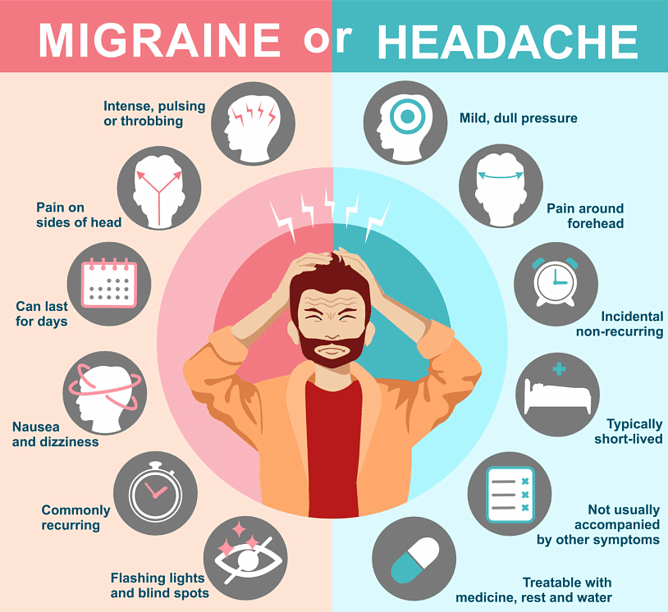
If you, or someone you know or love, suffers from migraines, you will know they are so much more than 'just a headache'
The throbbing pain, the nausea, the sensitivity to light and sound, the days lost to lying still in a darkened room: this is a reality for hundreds of thousands of New Zealanders.
Take migraines very seriously
Recent figures from the Migraine Foundation Aotearoa New Zealand are striking. Migraine is now estimated to affect around 733,000 people in New Zealand, and researchers believe that number likely undercounts the true picture, since roughly half of adults with migraine symptoms have never received a formal diagnosis.
Globally, migraine ranks as one of the leading causes of disability among people under 60, and in Australasia and Western Europe it is the single biggest cause of health loss from any neurological condition, ahead of stroke, dementia and Parkinson's disease combined.
That last point matters, because migraine is not fatal, yet its sheer prevalence and the way it strikes people again and again, often from a young age, gives it an outsized impact on daily life, work and wellbeing. It is a genuinely under-resourced area of New Zealand healthcare too: as of this year, there are only a handful of specialist headache clinicians in the whole country.
Numbers like these are a reminder that migraine deserves to be taken seriously, and that anyone searching for gentle, complementary ways to ease the burden is asking a very reasonable question.
Stress management is critically important
For many migraine sufferers, stress is one of the most consistent triggers. When the body stays in a heightened, sympathetic 'fight or flight' state for too long, it can keep the nervous system on edge, priming the ground for pain to take hold more easily.
This is where Reiki has something authentic to offer.
Reiki works with the body's own capacity for balance, gently supporting a shift out of that stress state and into the parasympathetic 'rest and digest' response, the state in which the body slows down, relaxes and begins to heal itself.
Several published studies have measured this directly, showing reductions in heart rate, blood pressure and self reported stress following Reiki treatment, consistent with parasympathetic activation.
A 2025 exploratory study published in Frontiers in Psychology looked at brief, ten minute, Reiki sessions offered in high-stress community settings and found meaningful reductions in participants' self-reported stress and pain.
A broader 2014 literature review in Pain Management Nursing examined randomised trials of Reiki for pain and anxiety and found consistent enough signals of benefit to call for continued, more rigorous research
A recent Australian survey of health professionals and the public found that around seven in ten respondents who had tried energy healing had specifically used Reiki, a sign of just how mainstream this natural, gentle therapy has become as a complementary support.
How Reiki may support migraine sufferers
Reiki is not a replacement for medical care, and anyone with migraines should continue working with their doctor or neurologist.
What Reiki can offer, gently and without side effects
Calms the triggers
Because stress is such a common precursor to migraine, regular Reiki sessions that soothe the nervous system may help reduce how often stress tips over into a full attack.
Eases the tension in the body
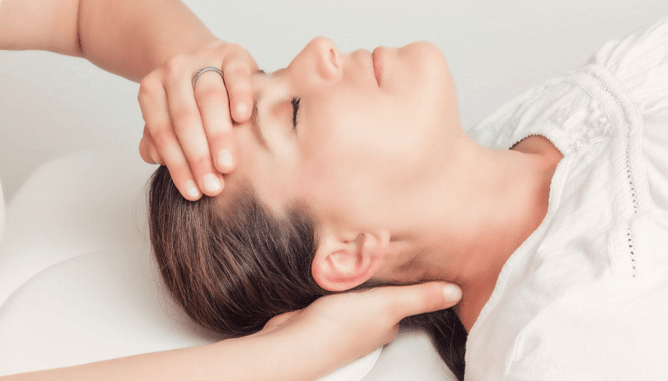
Reiki treats the whole person, not just the site of pain. Many people notice that tightly held tension in the neck, shoulders and scalp, begins to release during a Reiki session, tension that so often quickly becomes overwhelming.
A sanctuary during an attack
The stillness, quiet and focused, caring presence of a Reiki session can itself be part of the relief, offering the nervous system a chance to settle when everything else feels overwhelming.
Supporting sleep and recovery
Better rest is protective against migraine, and Reiki's deeply relaxing effect helps the body wind down into deeper levels of restorative sleep.
Empowered, natural self-help
Living with a chronic, unpredictable condition can feel disempowering. Learning Reiki yourself, even at a foundational level, can give you a gentle, always-available tool to reach for when you, or someone you know, feels a migraine coming on or building.
A gentle, natural, safe path forward
None of this is about replacing what your doctor has prescribed. It is about widening the circle of support around you, and recognising that healing is rarely just physical. It is emotional, energetic and deeply personal, too.
If you, a loved one or someone you know, lives with migraines, please know that you are not alone, and that there are gentle, evidence-informed ways to walk alongside the pain rather than only fighting it.
Reiki has helped so many people find a little more ease, a little more calm, and a little more trust in their body's own capacity to heal.
If you would like to explore what a Reiki treatment, or learning Reiki for yourself, might offer you, I would love to talk with you about it.
Relevant Reiki research and resources
For those who would like to look further into the research behind this article, here are some current, credible sources:
Migraine Foundation Aotearoa New Zealand: Update on the number of people with migraine in NZ
Migraine Foundation Aotearoa New Zealand: Current issues and challenges
Awareness and Use of Reiki, Reiki Research, Energy Healing, and Complementary Medicine amongst Australian Health Professionals and the Community, Zadro & Stapleton, 2026
Investigating perceived stress and pain reduction following brief Reiki sessions, Frontiers in Psychology, 2025